
This is a message from Hassan, brother of the forcibly disappeared Syrian Chess Champion Rania Al-Abbasi. It is a letter of grief and a note of gratitude to all of you who have taken action and raised awareness for Syria’s disappeared over the years. Join him in sharing your solidarity with all the families who still wait for answers.
For 13 years, we have been searching for answers. In March 2013, my sister Rania, her husband Abdulrahman, and their six children were taken from their home in Damascus and disappeared into the Assad regime’s detention system. My nieces and nephews, Dima, Entisar, Najah, Alaa, Ahmed, and Layan, were just 14, 13, 11, eight, six, and two years old.
Two months ago, we learned the fate of my sister’s children after a video was shared with us, which confirmed to us that they had been executed shortly after their abduction. In a way, the ending was even more painful than all the years of waiting.
Until the very last day, we believed the children were alive. For nearly a year and a half, we believed a girl in one of the state orphanages’s adverts might be Dima. We had received information that suggested the children might have been placed in an orphanage run by the international charity SOS Children’s Villages, and when we saw the girl in the video, we held onto that hope.
We compared her face using every method we could, even artificial intelligence tools, trying to determine whether she might be our niece. But it wasn’t her. Like so many other leads, that hope disappeared too.
This has been the pain of so many families. The Assad regime systematically forcibly separated hundreds of children from their families and placed them in state-run or affiliated orphanages, most of which were affiliated with Asmaa Al-Assad, wife of Bashar Al-Assad, some as newborns, others as toddlers. They were used as tools to punish parents, extract cooperation, or erase family identities.
The impact for every family is catastrophic. Every morning you wake up believing your loved ones must still be alive. Then something happens, and you start believing they must have been killed. You live and die a million times.
At the toughest of moments, it helped to know that people were sharing our story, expressing outrage, or standing beside us.
To everyone around the world who stood with us and sent us messages of solidarity over the years: thank you. You reminded us that humanity has no nationality and no borders. Humanity rises above everything.
But our search for justice is far from over. The truth has only just begun to emerge, and we cannot stop now. Will you leave a message of solidarity today? We will share your words with families of Syria’s disappeared children to remind them they are not carrying this pain alone.
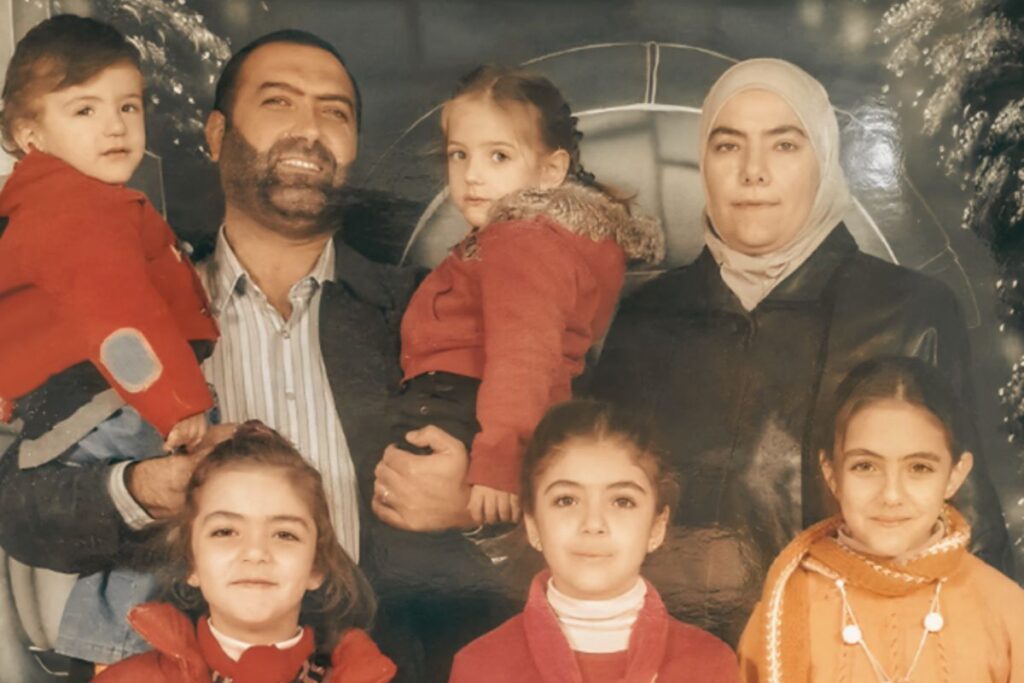
Rania al-Abbasi, her husband Abdul Rahman Yasin, and their children.
They were a beautiful, happy family. We used to go to the park together. My sister was Syrian Women’s Chess Champion and we trained and competed together. Later she became a dentist, married, and had six beautiful children. Their family was full of joy, tears, games, and mischief.
Today, we still do not know Rania’s fate and we do not know the details of what happened to her children. Today, we demand that the fate of all children and all forcibly disappeared people be revealed. We demand that archives be preserved so the truth can be uncovered and everyone responsible can be identified. We demand the protection of mass graves, DNA identification of human remains, and real justice—not symbolic justice.
To the international community: Don’t tell us you didn’t know. You knew. Rania’s case was documented from the very beginning. It is time to help us bring Bashar al-Assad to justice.
To the transitional government: Do not waste this historic opportunity. Work with civil society and survivors to end enforced disappearance, build a country based on justice, transparency, and participation.
To all who stand for truth and justice: Do not let our loved ones be forgotten. Stand with us today and show Syria’s families that they are not alone.
In solidarity and hope,
Hassan al-Abbasi